


As the “rice of industry”, fasteners are indispensable core basic components for the global manufacturing industry. In 2026, driven by the global manufacturing transformation and upgrading, the rise of emerging industries, and supply chain restructuring, the hardware fastener industry is ushering in a new pattern of coordinated development featuring high-endization, intelligence, greenization, and globalization. Based on global market dynamics and technological changes, this report analyzes the core industry trends to provide references for international station merchants to deploy in the global market.
I. Upgrade of Market Demand Structure: Emerging Industries Become Core Growth Engines
The global fastener market demand continues to expand, with a clear high-end tilt in structure, driven by both the upgrading of traditional industries and the outbreak of emerging industries.
In the automotive sector, new energy vehicles (NEVs) have become the core growth driver. Compared with traditional fuel vehicles, NEVs require 20%-30% more fasteners per vehicle, and impose strict requirements on product performance—scenarios such as battery packs and electric drive assemblies demand fasteners with excellent corrosion resistance, vibration resistance, and fatigue life. Stainless steel fasteners, with their superior comprehensive mechanical properties, are seeing a growing application ratio in key parts such as battery module fixing and body structure connection. Meanwhile, the trend of automotive lightweighting is promoting material iteration; aluminum fasteners, with a 30% weight reduction advantage, are gradually replacing traditional steel products and becoming an important part of vehicle weight reduction solutions.
High-end demand in the aerospace and electronic equipment sectors is also releasing simultaneously. The aerospace industry’s demand for high-precision, high-reliability fasteners is increasing, driving the R&D and application of fasteners made of special materials such as titanium alloys and ultra-high-strength steel. As electronic equipment moves towards miniaturization and thinness, requirements for the precision and stability of micro-precision fasteners are constantly rising, making the high-end electronic fastener market grow faster than the industry average.
Demand in the construction industry remains steady. The popularization of prefabricated buildings and the global boom in infrastructure construction are driving the demand for light steel structure fasteners and anti-corrosion construction fasteners. Especially in emerging markets such as Southeast Asia and Africa, the intensive launch of infrastructure projects has formed rigid demand, becoming an important growth point for standard fastener exports.
II. Accelerated Technological Iteration: Intelligent Manufacturing and Material Innovation Reshape Industrial Value
The industry is moving away from traditional processing models, driving product quality improvement, efficiency enhancement, and value increment through technological innovation, forming a three-dimensional transformation pattern of “intelligent manufacturing + material upgrading + process optimization”.
The full implementation of intelligent manufacturing has become a core competitiveness. The concept of Industry 4.0 has been deeply infiltrated, and leading enterprises have successively laid out digital factories. Technologies such as automated production lines, industrial Internet platforms, and 3D-printed precision molds are widely applied, shortening product R&D cycles by 30%, reducing defect rates by 40%, and significantly increasing per capita output value. Online visual inspection systems have become standard equipment for high-end production capacity, with an inspection efficiency 8 times higher than that of manual work, enabling real-time monitoring of product dimensional accuracy to meet the precision requirements of high-end scenarios such as aerospace and automotive. In the future, the coverage rate of digital design and online inspection technologies will continue to rise, and intelligent production capacity will become a key barrier for enterprises to participate in global competition.
Material and process innovation are addressing quality pain points. To adapt to complex working conditions, anti-corrosion technologies such as nano-coating and hot-dip galvanizing have become popular, extending product service life by 50%. The usage of super-hard alloys and lightweight aluminum alloy materials is increasing, achieving weight reduction goals while ensuring strength. Powder coating processes are gradually replacing traditional electroplating, solving environmental problems while improving product appearance texture and wear resistance. In NEV scenarios, fasteners have evolved from single standard parts to core variables in engineering design, and the focus of enterprise competition has shifted from product parameters to overall manufacturing capabilities and working condition adaptability.
III. Restructured Global Market Pattern: From Europe-US Dominance to Multi-Regional Coordinated Growth
The global fastener trade pattern presents the characteristics of “market diversification and regional gradient”, with differentiated demand in traditional markets and emerging markets becoming new growth poles.
The European market performs strongly, becoming the largest export destination cluster for Chinese fasteners. Demand in major economies such as Germany, the UK, Italy, and the Netherlands continues to grow, with year-on-year growth rates of 8.8%, 6.9%, 14.5%, and 14.9% respectively. Stable demand in sectors such as automotive manufacturing, mechanical equipment, and construction infrastructure supports the industry. The Fastener Expo Frankfurt, held every even year starting from March 2026, will further strengthen Europe’s position as a global hub and promote multi-dimensional supply chain collaboration.
The US market is under pressure. Supply chain “nearshoring” policies and trade barriers have led to a nearly 10% year-on-year decline in China’s exports to the US, with reduced export dependence. Enterprises need to break through barriers through high-end product development and compliant operations, focusing on differentiated demand in high-end US market segments such as NEVs and aerospace.
Emerging markets show great growth potential, with Southeast Asia, Central Asia, and Africa becoming core growth zones. Thanks to its re-export trade advantages, Vietnam has become China’s second-largest single export destination for fasteners, with export volume growing by over 30% year-on-year. In ASEAN countries such as Thailand and Malaysia, export volumes have increased by 15.1% and 17.4% respectively due to regional engineering construction and processing and assembly activities. Exports to Central Asian countries such as Kyrgyzstan and Kazakhstan have surged; as the core of the “Belt and Road” western corridor, Xinjiang has driven a 93.4% year-on-year export growth through China-Europe Railway Express. Benefiting from infrastructure advancement, the African market has seen export growth rates exceeding 10% in countries such as Nigeria and Egypt, with Chinese fasteners gaining a substitution effect through cost-effectiveness and delivery capabilities.
IV. Industry Development Challenges and Solutions
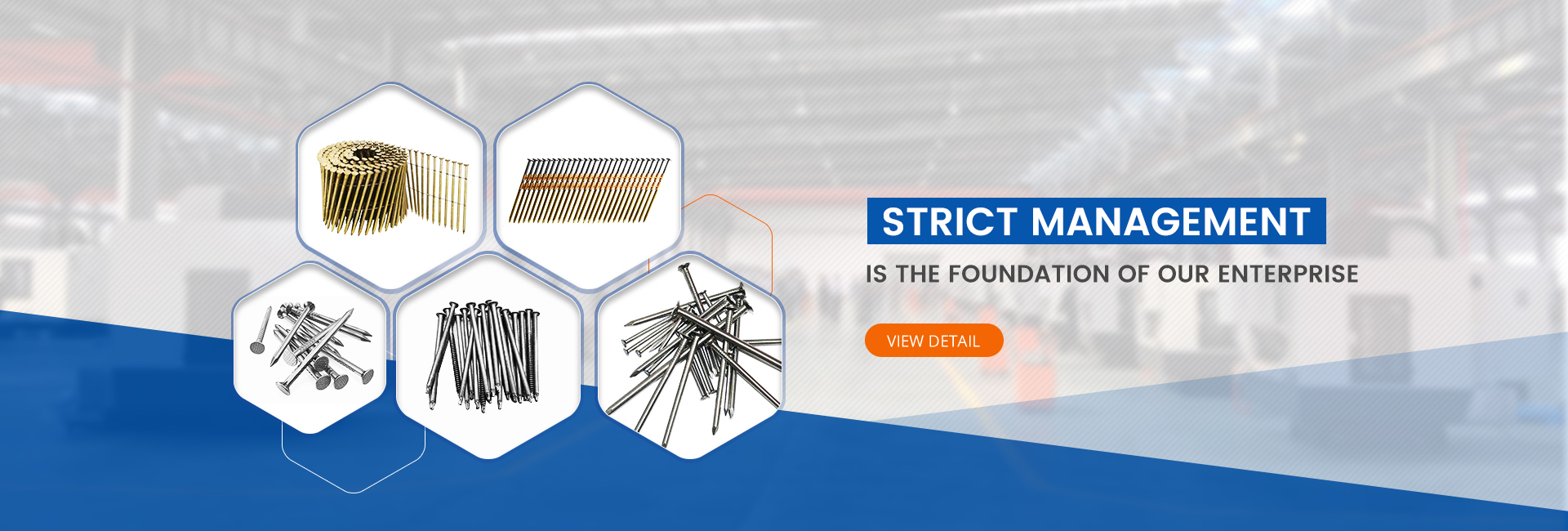
While the nails, nail making machines, and construction hardware segments are developing rapidly, the industry also faces multiple challenges such as raw material price fluctuations, stricter environmental policies, and technological iteration pressure. Steel, the core raw material for nail production, accounts for over 65% of nail manufacturers’ production costs, with annual price fluctuations exceeding 20%, directly affecting the pricing and profit margins of iron nails, construction-specific nails, and other products, and bringing significant cost control pressure to small and medium-sized nail making enterprises. Global environmental policies are continuously tightening; the EU’s “Sustainability Standards for Metal Products” and green building material certification requirements in various countries are forcing the nail making industry to eliminate traditional high-pollution electroplating processes and switch to environmentally friendly processes such as powder coating and hot-dip galvanizing, while imposing higher energy efficiency requirements on nail making machines. In addition, the transformation of the construction industry towards prefabricated construction has upgraded requirements for nail precision, corrosion resistance, and adaptability. Ordinary iron nails produced by traditional nail making equipment can hardly meet quick-installation construction scenarios, and the high R&D and equipment update costs of intelligent nail making machines have further intensified industry differentiation.
To address these challenges, enterprises need clear solutions: Leading enterprises should focus on intelligent manufacturing and industrial chain integration, build integrated service capabilities of “products + solutions”, lay out overseas production bases, and strengthen global supply chain stability. Small and medium-sized enterprises should deepen niche segments, build technological barriers in special fasteners and customized products, and achieve differentiated competition relying on regional industrial clusters. Export-oriented enterprises should accelerate the diversification of market layout, focus on expanding emerging markets along the “Belt and Road” and in Africa, while strengthening brand building and compliance management to break trade barriers and transform from “volume growth with stable prices” to “quality and price improvement”.
V. Future Outlook
In 2026 and beyond, the hardware fastener industry will continue to deepen its transformation towards high-endization, intelligence, greenization, and internationalization. Emerging industries such as NEVs, aerospace, and new energy will continue to drive high-end demand; intelligent manufacturing and material innovation will reshape industrial competitiveness; the global market will form a pattern of “stabilizing shares in high-end European and American markets and expanding increments in emerging markets”. For international station merchants, grasping segmented scenario demand, strengthening technological innovation, and deploying diversified markets will be the core keys to seizing industry dividends and achieving global growth.
Post time: Jan-26-2026