

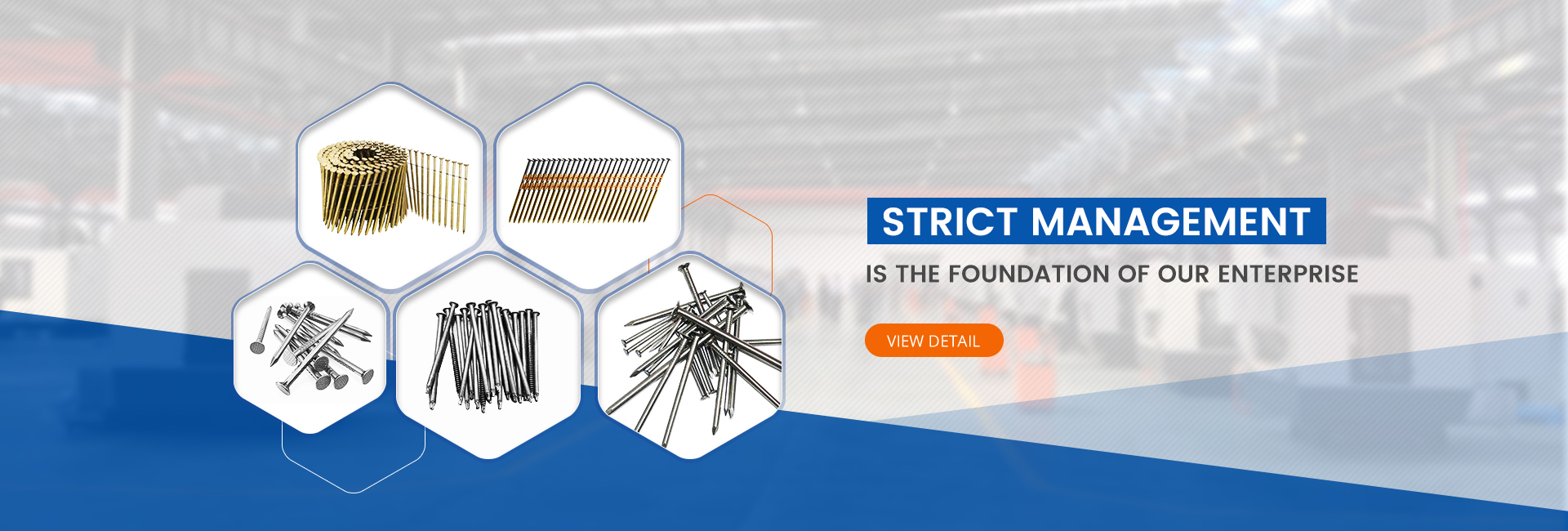
Coil nails are widely used in construction, woodworking, pallet manufacturing, packaging, roofing, fencing, and other industrial applications where efficient and reliable fastening is required. To achieve stable performance in high-volume fastening operations, the manufacturing process needs to maintain consistent dimensions, accurate collation, reliable welding, and good surface quality. Our coil nails are produced through a controlled manufacturing process, with careful attention given to every stage from steel wire preparation to finished product inspection and packaging.
The production process begins with carefully selected steel wire. The quality and mechanical properties of the raw material have a direct influence on the strength, forming performance, and overall consistency of the finished nails. Before production, the wire is checked according to the required specifications and then prepared for subsequent processing. Depending on the final nail specification, the wire is processed to achieve the required diameter and surface condition, providing a stable foundation for accurate nail forming.
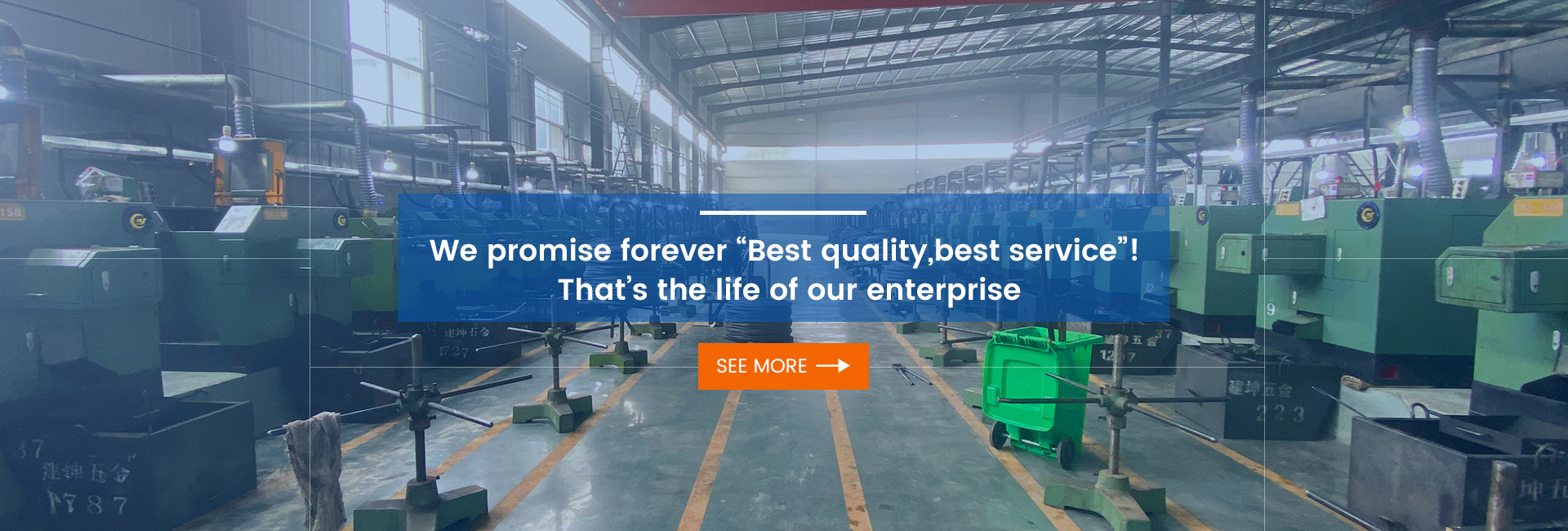
After wire preparation, the wire enters the nail-making process. High-speed nail-making equipment forms individual nails according to the specified length, shank diameter, head configuration, and point design. Precise forming is important because even small variations in nail dimensions can affect feeding performance and fastening results. During production, the forming process is continuously monitored to maintain consistent nail dimensions and minimize variations between individual pieces.
The nail shank, head, and point are formed according to the intended application. The shank can be produced in different configurations depending on customer requirements, while the nail point is precisely formed to provide smooth penetration into the target material. Consistent head dimensions also help ensure stable contact between the nail and the fastening surface.
After nail forming, the nails are transferred to the collation process. Individual nails are accurately positioned and connected into continuous strips using welding wire or other suitable collation methods, depending on the product design. Accurate nail spacing and stable welding are essential for reliable feeding. The finished strip is then formed into a coil with a controlled diameter and arrangement, allowing the coil nails to be loaded into compatible pneumatic or gas-powered nailers for continuous fastening operations.
Collation quality is an important part of coil nail manufacturing. If the nail spacing, welding points, or coil arrangement are inconsistent, the nails may not feed smoothly during application. Therefore, the production process focuses on maintaining stable nail positioning and secure connections between nails. The coil formation process is also controlled to ensure that the finished coils maintain a consistent shape and can be handled, packed, transported, and used efficiently.
Surface treatment can be selected according to the customer’s application and market requirements. Coil nails may be supplied with a plain finish or with different protective coatings, such as electroplating or other surface treatments, where additional corrosion resistance is required. Surface treatment helps improve the appearance and durability of the nails and can make them more suitable for different working environments.
Quality control is carried out throughout the production process rather than only at the final stage. Key characteristics such as nail length, wire diameter, head dimensions, point shape, welding quality, nail spacing, coil diameter, and surface condition can be checked according to the product specification. Visual inspection is also used to identify defects that could affect the appearance, feeding performance, or practical use of the finished product.
Before shipment, finished coil nails are inspected and packed according to customer requirements. Packaging can be customized in terms of quantity, carton size, labeling, product identification, and customer branding. Proper packaging helps protect the coils during handling and transportation while also making the products easier to store and distribute.
A consistent manufacturing process is essential for producing coil nails that perform reliably in demanding applications. By controlling raw materials, nail forming, collation, coil formation, surface treatment, inspection, and packaging, we aim to provide stable products for professional users, distributors, and industrial customers.
Our coil nails are suitable for a wide range of applications, including construction, pallet and wooden packaging production, roofing, fencing, woodworking, furniture manufacturing, and general assembly. With different sizes, finishes, and configurations available, the products can be supplied according to specific application requirements.
From the first stage of wire preparation to the final inspection of finished coils, every production step contributes to the quality and reliability of the final product. Our focus is on consistent manufacturing, precise processing, dependable collation, and practical performance, providing coil nails that support efficient fastening operations across different markets and applications.
Post time: Aug-12-2026