

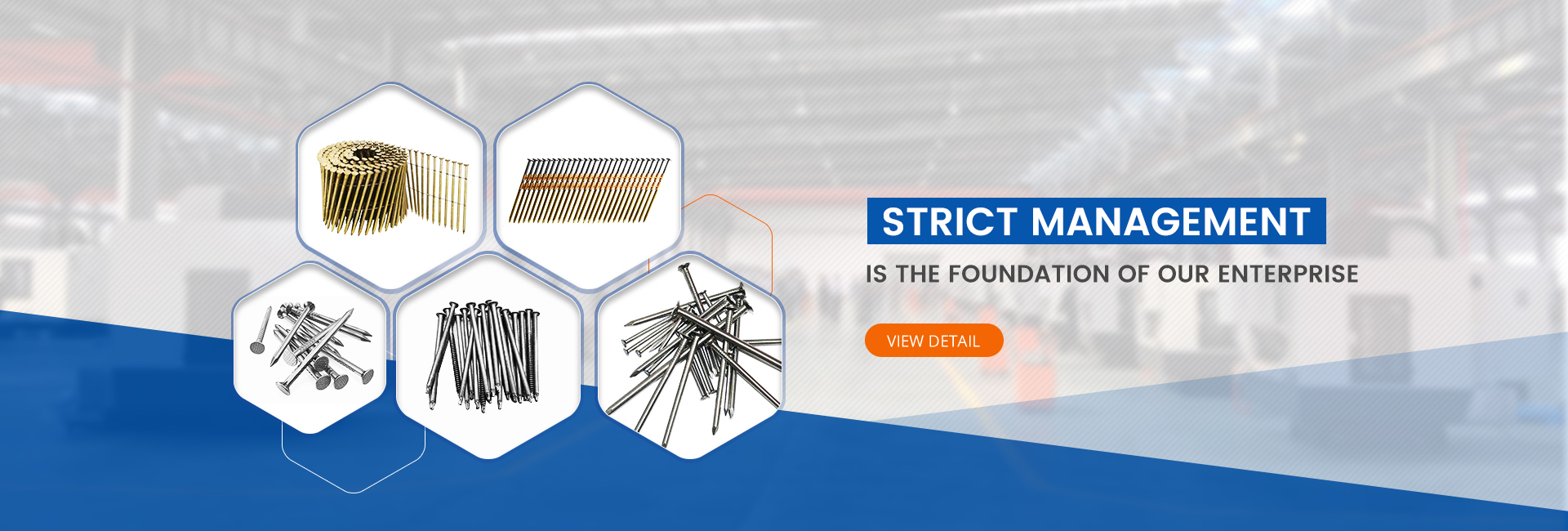
In the world of industrial manufacturing and construction, coil nails and staple serve different purposes. Understanding the differences between the two is crucial for choosing the right fastener for a project, whether it involves heavy-duty construction or more delicate assembly tasks.
Coil nails are favored for heavy-duty applications like roofing, decking, and framing. Their durability and ability to hold large numbers in a coil for pneumatic nailers make them an efficient choice for projects that require a significant amount of nailing. Coil nails are typically used with harder materials like wood and metal, where they provide strong holding power and resistance to pulling out.
One of the key advantages of coil nails is the speed with which they can be deployed. Pneumatic coil nailers allow workers to shoot dozens of nails in a matter of seconds, significantly reducing time spent on projects. In addition, coil nails are often available with protective coatings, such as galvanized or stainless steel, which make them more resistant to rust and corrosion. This is a critical factor for outdoor projects where exposure to moisture could otherwise lead to fastener failure.
Staple nails, on the other hand, are commonly used in lighter applications, such as upholstery, insulation, and furniture assembly. While they do not offer the same holding power as coil nails, they are incredibly versatile. Staple nails are less likely to split thin materials like plywood or fabric, which makes them ideal for tasks that require more precision and care.
The choice between coil nails and staple nails often comes down to the specific requirements of the project. For industrial applications that require speed, strength, and durability, coil nails are the better choice. However, for projects that involve softer materials or require more precision, staple nails are often the superior option.
Ultimately, both coil and staple nails have a place in industrial use, and understanding their respective strengths and weaknesses can help ensure that the right fastener is selected for the job.
Post time: Oct-30-2024