

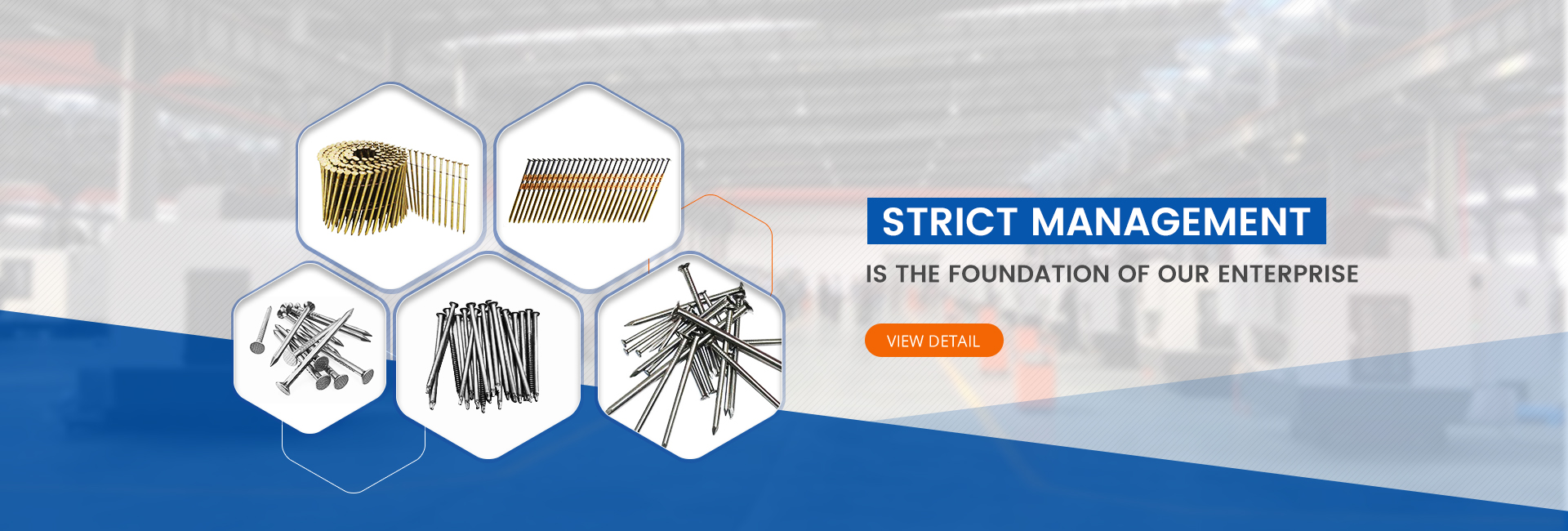
Coil nails are widely used in wooden pallet manufacturing, wood packaging, timber construction, fencing, and other woodworking applications.
Unlike loose nails, coil nails are connected by wire welding or plastic sheets to form continuous coils. They are designed for use with pneumatic coil nailers, helping reduce reloading time and improve productivity in continuous nailing operations.
For coil nail manufacturers, product quality depends on more than just raw materials. Nail dimensions, forming accuracy, shank design, surface treatment, collation quality, and welding strength all play important roles.
A reliable coil nail goes through several manufacturing stages before it is ready for delivery. Here is an overview of the main production process.
1. Raw Material Selection: The Foundation of Nail Quality
Low-carbon steel wire is commonly used as the main raw material for coil nail production.
The wire diameter, tensile properties, ductility, and surface condition can all affect the manufacturing process and final product performance.
Before production begins, manufacturers select suitable wire specifications according to the required nail diameter, length, shank design, and application.
Important factors include:
- Wire diameter and dimensional consistency.
- Surface condition and rust prevention.
- Strength and ductility for cold forming.
- Consistency between material batches.
Good raw material selection helps maintain stable production and reduces dimensional defects during subsequent processing.
2. Wire Drawing: Achieving the Required Wire Diameter
When the original wire diameter does not match the required nail specification, wire drawing is used to reduce it.
During this process, thicker steel wire passes through a series of drawing dies, gradually reducing its diameter until it reaches the required size for nail making.
Drawing speed, die condition, and lubrication all need to be properly controlled.
Poor process control may result in diameter variations, surface scratches, or changes in material properties.
For coil nail manufacturers, stable wire drawing helps improve production efficiency and provides consistent material for the nail-making process.
3. Nail Making: Forming the Head, Shank, and Point
Nail making is one of the most important stages in coil nail production.
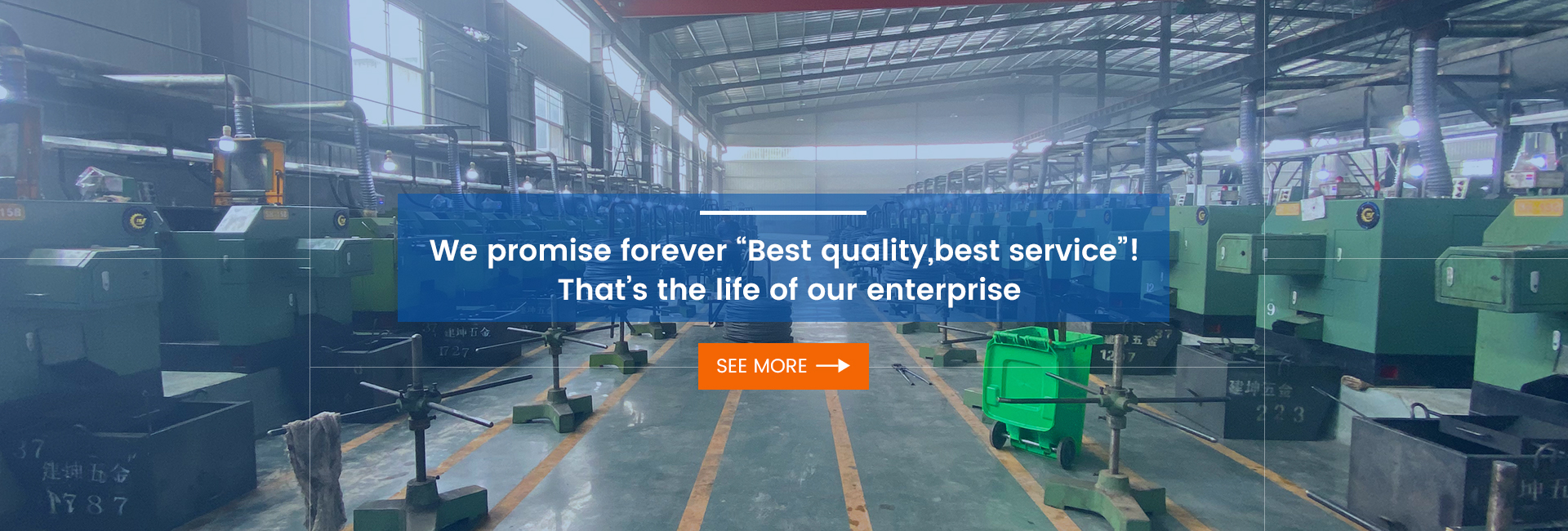
The drawn wire is fed into a high-speed nail-making machine. Through a series of operations, including feeding, clamping, cutting, heading, and pointing, individual nails are formed.
Depending on customer requirements, manufacturers can produce different nail lengths, diameters, head styles, and point designs.
Key quality points include:
- Consistent nail length.
- Accurate shank diameter.
- Proper nail head size and shape.
- Centered and properly formed points.
- No visible cracks, burrs, or deformation.
Machine stability and tooling accuracy have a direct impact on finished nail consistency.
4. Thread Rolling: Creating Different Shank Designs
Depending on the application, coil nails can have different shank designs, including smooth shank, ring shank, and screw shank.
Ring shank and screw shank coil nails are commonly used in wooden pallet and packaging applications where stronger holding performance is required.
Thread rolling machines form the required patterns on the nail shank through a specialized rolling process.
Important factors include:
- Thread or ring depth.
- Pattern spacing and consistency.
- Final shank dimensions.
- Prevention of bending or surface damage during processing.
The appropriate shank design can improve mechanical engagement between the nail and wood. Actual holding performance also depends on wood type, moisture content, nail dimensions, and installation conditions.
5. Surface Treatment: Improving Corrosion Resistance
Coil nails can receive different surface treatments according to the intended application and environmental requirements.
Common options include:
Electro-Galvanizing
This process applies a zinc coating to the nail surface, providing basic corrosion protection. Electro-galvanized coil nails are commonly used in indoor packaging, pallet manufacturing, and general woodworking applications.
Hot-Dip Galvanizing
Nails are coated through a hot-dipping process to form a zinc layer. It generally provides stronger corrosion protection than standard thin electro-galvanized coatings, depending on coating thickness and process quality.
Stainless Steel
Stainless steel coil nails are suitable for applications requiring higher corrosion resistance. Different stainless steel grades are available for different environments.
The appropriate surface treatment should be selected according to the actual working environment, customer specifications, and corrosion protection requirements.
6. Collation and Welding: Forming the Nail Coil
After nail forming and the required surface treatment, the nails move to the collation and welding stage.
Individual nails are arranged at a specified angle and spacing, then connected using wire welding or plastic sheets to form continuous coils.
This process directly affects nail feeding performance in pneumatic coil nailers.
Important production controls include:
- Uniform nail alignment.
- Consistent spacing between nails.
- Secure welding points.
- Correct collation angle.
- Stable coil shape without loosening or deformation.
Weak welding may cause nails to separate during handling, transportation, or application. Inconsistent spacing may also interfere with the nailer’s feeding mechanism.
7. Quality Inspection: Maintaining Consistent Product Performance
Quality inspection is an essential part of coil nail manufacturing.
In addition to visual checks, manufacturers should inspect key dimensions and connection performance according to customer requirements and product applications.
Common inspection items include:
| Inspection Item | What to Check |
|---|---|
| Nail Length | Compliance with specified dimensions |
| Shank Diameter | Dimensional consistency |
| Nail Head | Size and shape accuracy |
| Nail Point | Alignment and deformation |
| Welding Strength | Secure nail connections |
| Collation Quality | Consistent angle and spacing |
| Galvanized Finish | Coating appearance and specifications |
| Nailer Test | Smooth feeding and proper firing |
For export orders, batch sampling and inspection should be conducted according to agreed quality requirements to maintain consistency between production batches.
8. Packaging and Shipping: Protecting Products During Delivery
After inspection, coil nails are packed according to the required specifications and packaging methods.
Common options include carton packaging, pallet packaging, and customized packaging solutions.
Important packaging considerations include:
- Accurate product specifications and quantities.
- Cartons with sufficient strength.
- Proper arrangement inside each carton.
- Stable pallet stacking to prevent movement during transportation.
- Correct shipping marks and customer labels.
For export shipments, container loading space, pallet dimensions, and transportation safety should also be considered to ensure products arrive at the customer’s warehouse in good condition.
Conclusion
Coil nail manufacturing involves much more than simply turning steel wire into nails and arranging them into coils. Every production stage contributes to the final product’s consistency and performance.
From raw material selection and wire drawing to nail making, thread rolling, surface treatment, welding, inspection, and packaging, stable manufacturing processes and effective quality control are essential.
As a professional coil nail manufacturer, we pay close attention to nail dimensions, shank designs, welding quality, collation accuracy, and packaging details. We aim to provide reliable coil nail solutions for wooden pallet manufacturers, wood packaging companies, and other industrial fastener buyers.
Post time: Nov-27-2026