

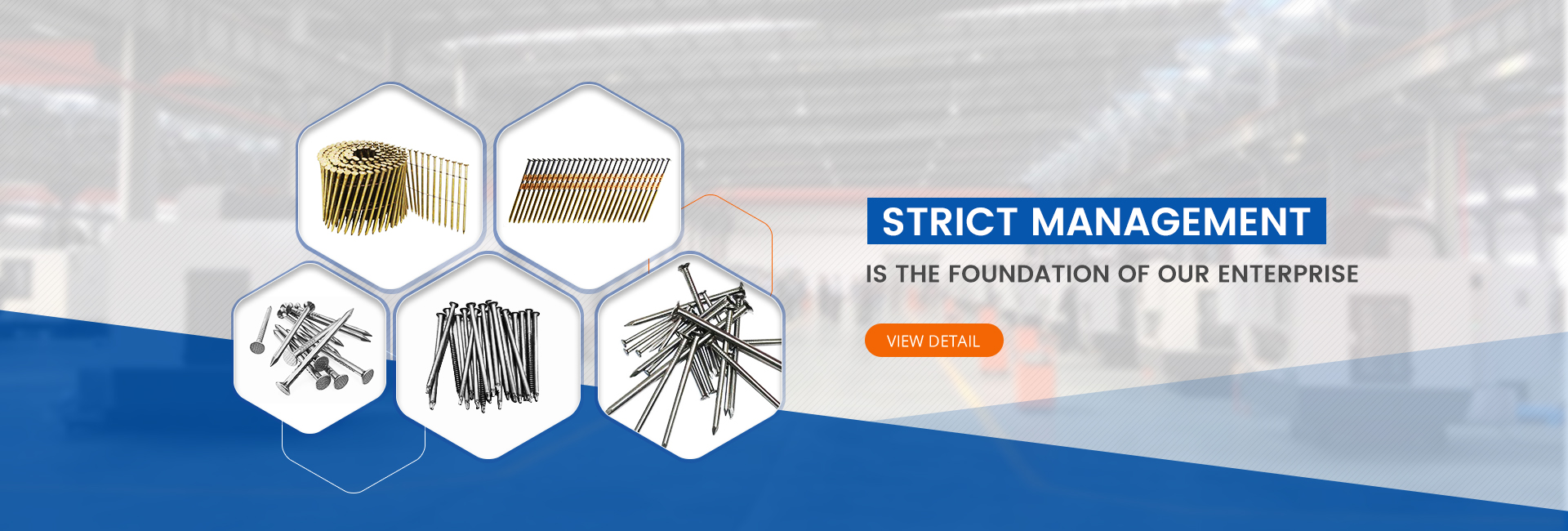
Plastic Sheet Coil Nails are widely used in wooden pallet manufacturing, wood packaging, fencing, timber construction, and other woodworking applications. With nails held together by plastic sheets, they offer convenient loading, organized collation, and efficient continuous nailing.
However, problems such as nail jamming, feeding difficulties, inconsistent driving depth, and irregular nail alignment may occur if the nail specifications, nailer, air pressure, or operating conditions are not properly matched.
To maintain consistent production and reliable fastening performance, several important factors should be considered.
1. Check Compatibility Between Nails and the Nailer
Before using plastic sheet coil nails, make sure they are compatible with your pneumatic nailer.
Different nailers have specific requirements for nail diameter, length, head size, collation angle, and plastic sheet design. Two nails may look similar but still may not work properly in the same tool.
Pay attention to the following points:
- Check whether the nail diameter and length match the nailer’s specifications.
- Make sure the nail head size is compatible with the feeding and driving mechanism.
- Confirm that the collation angle is correct.
- Check whether the plastic sheet securely holds the nails in position.
- Make sure the nails can move smoothly through the magazine.
Do not select nails based on appearance alone. Always follow the nailer manufacturer’s specifications. When changing suppliers or nail sizes, conduct a small-scale nailing test before full production.
2. Load Plastic Sheet Coil Nails Correctly
Proper loading helps prevent feeding problems and unnecessary nail jams.
Before loading, disconnect the air supply and follow the nailer manufacturer’s instructions. Check the magazine for plastic fragments, metal debris, or other foreign materials.
During loading:
- Make sure the nails face the correct direction.
- Avoid bending or squeezing the plastic sheets.
- Keep the nails properly aligned inside the magazine.
- Check that the feeding mechanism moves freely.
- Do not mix nails with different specifications or collation angles.
If the plastic sheets are visibly damaged or deformed, or if nails have become detached, do not continue using the affected coil.
3. Maintain Proper Working Air Pressure
Air pressure plays an important role in the driving performance of pneumatic nailers.
Insufficient air pressure may result in nails not being driven fully into the wood, weak driving force, or inconsistent tool operation.
Excessive pressure may drive nails too deeply, damage the wood surface, and increase wear on internal nailer components.
For better performance:
- Set the air pressure according to the nailer manufacturer’s recommendations.
- Use a pressure regulator to maintain a stable air supply.
- Check hoses and fittings for air leaks.
- Avoid increasing pressure excessively to compensate for feeding problems.
- Test the nailer on different wood materials and thicknesses.
The ideal air pressure is not necessarily the highest pressure. It should provide consistent driving depth without damaging the wood or the tool.
4. Consider Wood Material and Working Conditions
Wood density, hardness, moisture content, and thickness all affect nail-driving performance.
Hardwood generally offers greater resistance than softwood. If the nail length or diameter is unsuitable, nails may bend, fail to penetrate properly, or provide insufficient fastening performance.
Before production, consider the following:
- Select nail lengths according to wood thickness.
- Choose suitable nail diameters for the wood material.
- Avoid driving nails directly into severely cracked areas.
- Conduct test nailing when working with particularly hard wood.
- Maintain an appropriate distance from wood edges to reduce splitting.
For pallet manufacturers, nail selection should also consider pallet design, load requirements, and working conditions. Price and nail length should not be the only selection criteria.
5. Keep the Nailer Clean and Properly Maintained
During continuous operation, dust, wood chips, and plastic fragments may accumulate inside the magazine, feeding track, and driving mechanism.
This buildup can interfere with nail feeding and increase the risk of jamming or inconsistent firing.
Regular maintenance should include:
- Cleaning the magazine and feeding track.
- Lubricating the tool according to the manufacturer’s instructions.
- Checking the nosepiece, driver blade, and feeding mechanism for wear.
- Inspecting air hoses and fittings.
- Stopping operation if unusual noises, repeated jams, or inconsistent firing occur.
Always disconnect the air supply before maintenance and follow the tool manufacturer’s safety instructions.
6. Handle Nail Jams Properly
Nail jamming is one of the possible problems during the use of plastic sheet coil nails.
If a nail becomes stuck in the nosepiece or magazine, do not continue pulling the trigger or force the feeding mechanism.
Forced operation may damage internal components or cause a nail to be released unexpectedly.
Follow these steps:
- Stop operating the nailer immediately.
- Disconnect the compressed air supply.
- Remove remaining nails according to the tool manufacturer’s instructions.
- Check the jammed area and inspect the plastic sheet for damage.
- Remove foreign materials and inspect the feeding mechanism.
- Test the nailer again after resolving the problem.
If jamming occurs repeatedly, check the nail specifications, plastic sheet quality, nailer condition, and air pressure together. Do not assume that the problem always comes from the nails.
7. Store Plastic Sheet Coil Nails Properly
The plastic sheets used in collated nails can be affected by temperature, moisture, and storage conditions.
Improper storage may cause deformation or reduce the stability of the plastic connections, potentially affecting nail feeding performance.
For proper storage:
- Keep the products in a dry and well-ventilated indoor area.
- Avoid prolonged exposure to direct sunlight.
- Keep the products away from high-temperature sources.
- Maintain the original packaging to protect against dust and moisture.
- Avoid stacking heavy items on the products.
- Follow the first-in, first-out (FIFO) inventory principle.
Conclusion
The performance of plastic sheet coil nails depends not only on the nails themselves but also on nailer compatibility, stable air pressure, wood conditions, and proper equipment maintenance.
For wooden pallet and packaging manufacturers, choosing plastic sheet coil nails with consistent dimensions, accurate collation, and secure plastic connections can help reduce production interruptions and improve fastening efficiency.
As a professional fastener manufacturer, we pay close attention to nail dimensions, collation quality, connection stability, and packaging details. Our goal is to provide reliable plastic sheet coil nails that meet the practical requirements of our customers’ production processes.
Post time: Nov-27-2026