

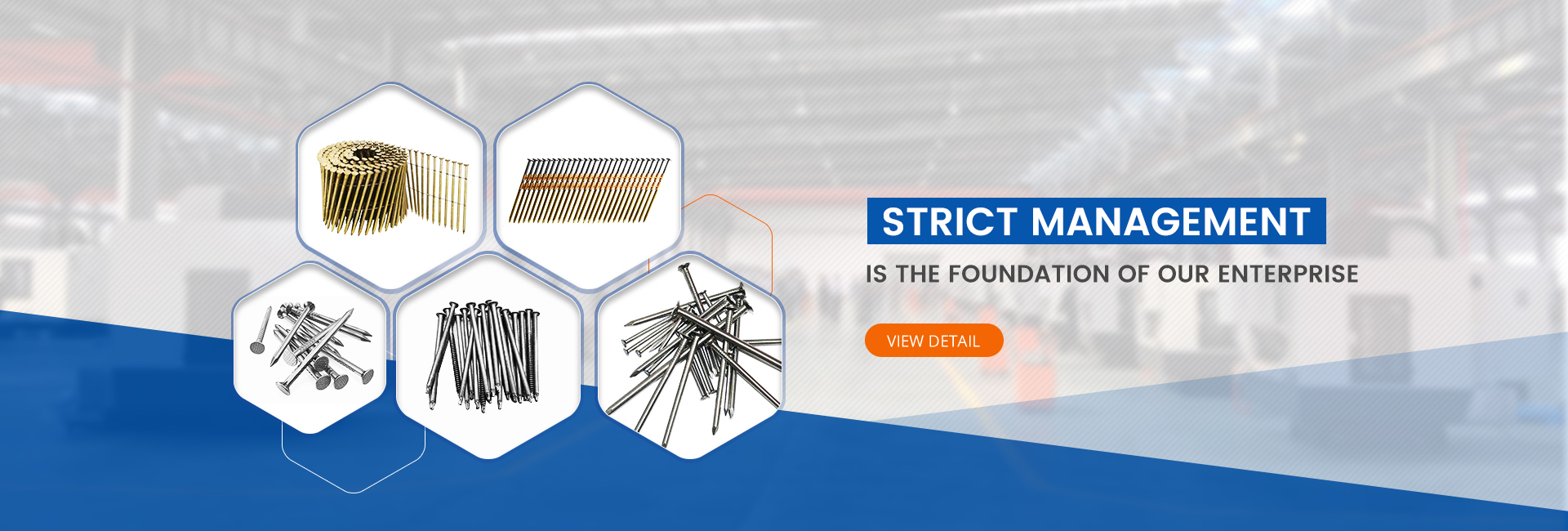
In the pallet, wooden packaging, construction and woodworking industries, coil nails are widely used as an efficient fastening solution. As production lines become faster and more automated, plastic collated coil nails are also becoming an important option for applications that require continuous nailing.
The main advantage of plastic coil nails is not simply that the nails are connected by plastic. More importantly, the continuous collated structure allows a compatible coil nail gun to feed and drive nails continuously, reducing interruptions during production.
For operations that use thousands or even tens of thousands of nails every day, this can make a meaningful difference in productivity.
1. What Are Plastic Coil Nails?
Plastic coil nails are individual nails arranged at a controlled pitch and held together by a plastic carrier or strip, forming a continuous coil.
The coil is loaded into a compatible coil nail gun, which automatically feeds, positions and drives the nails. Unlike loose nails, the operator does not need to reload individual nails repeatedly.
This continuous feeding system is particularly useful in high-volume manufacturing environments.
2. Why Are They Suitable for High-Speed Nailing?
One of the key advantages of a coil nailing system is continuity.
Take wooden pallet production as an example. A single pallet may require a large number of nails. With loose nails, operators need to handle and reload nails frequently. A coil nail gun can hold a much larger quantity at one time, reducing the number of reloads.
However, productivity does not depend only on how many nails are in one coil. It also depends on:
- Consistent nail dimensions
- Accurate nail spacing
- Stable plastic collation
- Proper nail point formation
- Consistent coil shape
- Compatibility with the nail gun
A small deviation in any of these areas can lead to feeding problems, jams or misfires.
3. Why Does Nail Quality Matter?
For industrial users, the cost of one nail may be relatively small. But a single defective nail can sometimes interrupt an entire production process.
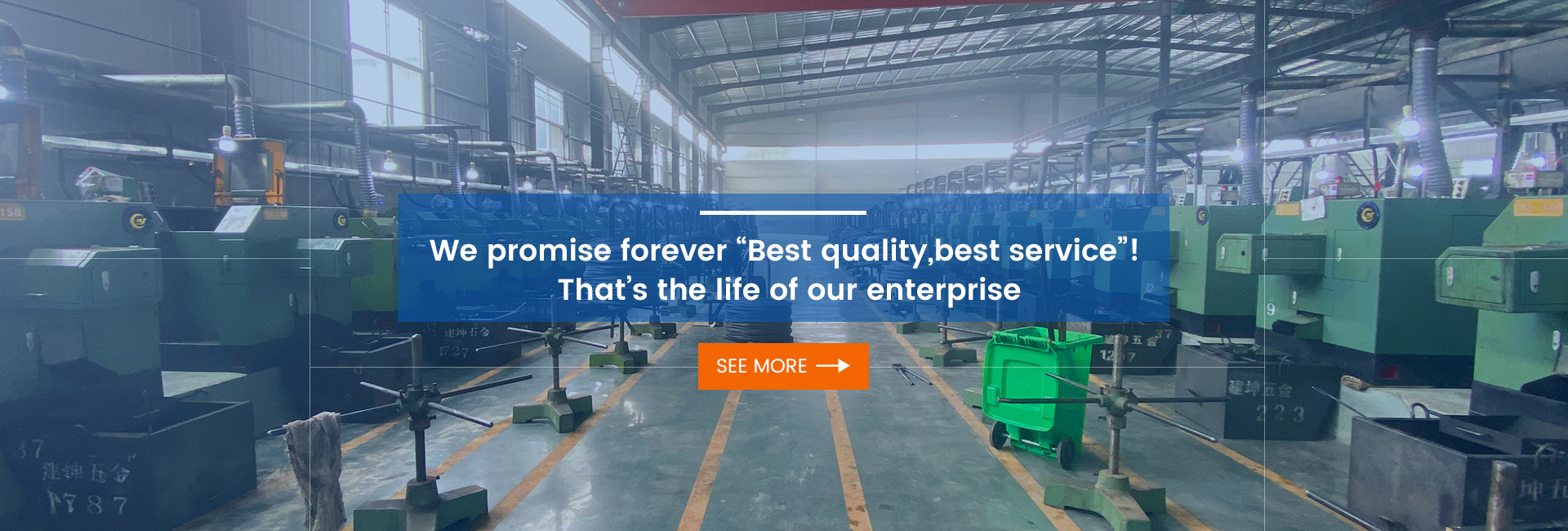
That is why quality control should cover the complete manufacturing process.
It starts with the wire material. Consistent raw material helps maintain stable nail strength and dimensions.
The next stages are wire drawing and nail forming. Stable nail diameter is important for proper tool compatibility.
Then comes the nail point. A properly formed point helps the nail penetrate wood efficiently while reducing unnecessary splitting.
Finally, the plastic collation needs to be controlled carefully. The plastic carrier must be strong enough to keep the nails properly aligned while still allowing smooth feeding through the nail gun.
For high-volume customers, the ability of every nail to feed and drive consistently can be more valuable than a single laboratory test result.
4. Where Are Plastic Coil Nails Used?
Plastic coil nails are commonly used in various wood-related applications.
Wooden pallet manufacturing is one of the typical applications. Pallet production involves a large number of repetitive fastening operations, making continuous coil nailing highly practical.
Other applications include wooden crates, packaging boxes, fencing, wood structures and certain outdoor woodworking projects.
Different applications require different nail characteristics. Pallet production may focus more on holding power, productivity and cost efficiency, while outdoor applications may place greater emphasis on corrosion resistance and surface treatment.
Therefore, choosing a coil nail should not be based only on nail diameter and length. The wood material, working environment, nail gun model and final product requirements should also be considered.
5. How to Choose the Right Plastic Coil Nails?
Several factors should be considered when selecting plastic coil nails.
First, nail diameter and length should match the material and the specifications of the nail gun.
Second, consider the surface treatment. Indoor applications and outdoor environments may require different levels of corrosion resistance.
Third, pay attention to the collation and plastic carrier design. Consistent collation helps maintain smooth feeding.
Fourth, the nail head and point design should be suitable for the application and wood material.
Finally, tool compatibility is essential. Even if the nail dimensions are correct, differences in collation angle, spacing or carrier design can still affect feeding performance.
6. Where Is the Industry Heading?
As pallet manufacturing, logistics packaging and wooden construction become increasingly automated, fastening systems are moving toward higher speed, better consistency and greater standardization.
Future coil nails will need to do more than simply provide reliable fastening. They will also need to perform consistently in automated production environments.
For manufacturers, this means quality control should go beyond simply checking whether the nail is qualified. More attention needs to be given to dimensional consistency, feeding stability and batch-to-batch repeatability.
For buyers, the lowest unit price is not always the most important factor. The real cost can also include reload time, nail jams, equipment downtime and the quality of the final fastening.
A nail may be small, but when it is used tens of thousands of times every day, consistency becomes productivity.
That is one of the reasons plastic coil nails continue to play an important role in modern woodworking and packaging applications.
Post time: Aug-31-2026