

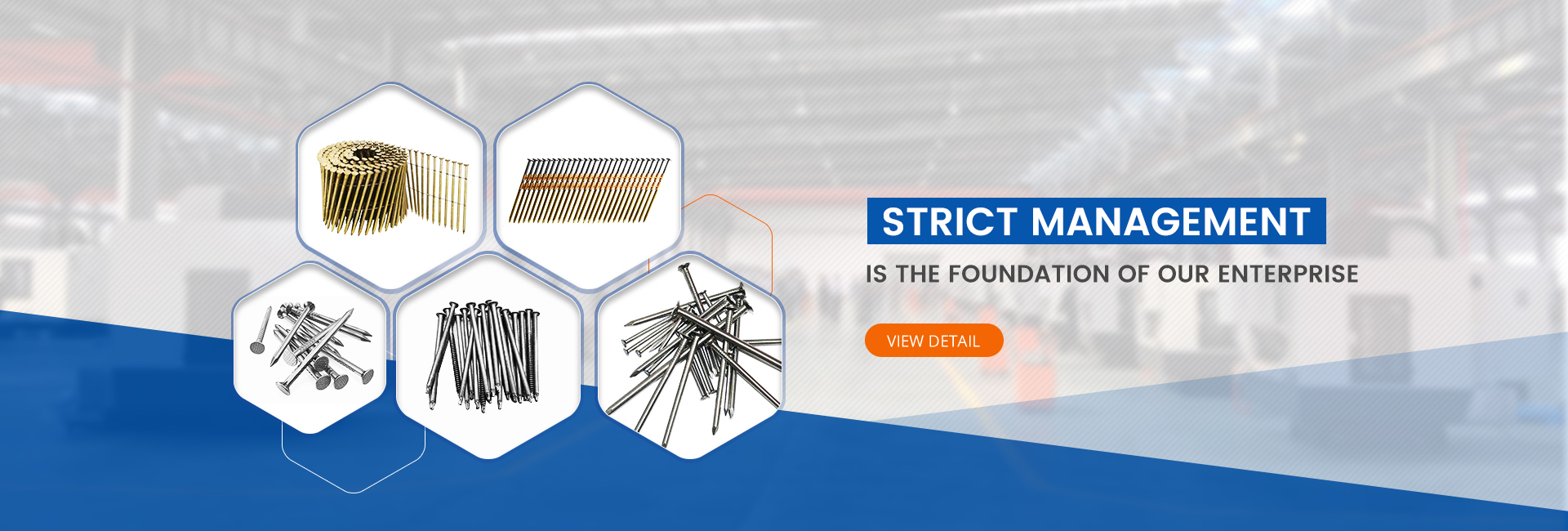
In modern construction and woodworking, fastener selection directly impacts structural integrity and work efficiency. Ring Shank Plastic Collated Nails provide superior holding power while optimizing workflow—ensuring both strength and speed in every project!
1. Ring Shank vs. Smooth Shank: What’s the Difference?
The ringed design increases surface friction, making ring shank nails 40%-70% stronger in withdrawal resistance compared to traditional smooth nails. They are ideal for wood framing, roofing, and flooring, where durability and holding power are crucial. In high-vibration environments (such as bridges or prefabricated structures), these nails significantly enhance long-term stability.
2. How Does Plastic Collation Improve Workflow?
No jamming, no double-firing – Ensures smooth operation with pneumatic nailers.
Faster reloading – Reduces downtime for workers, boosting productivity.
High visibility – Customizable plastic strips improve precision in low-light or high-altitude work environments.
By reducing interruptions and misfires, contractors can complete more work in less time, leading to significant cost and time savings on large-scale projects.
3. Why Are Smart Construction Sites Adopting Ring Shank Plastic Collated Nails?
In automated fastening systems and robotic assembly, consistency and reliability are key. Ring shank plastic collated nails ensure stronger grip, smooth feeding, and excellent compatibility, making them the preferred choice for modern smart construction tools. This enhances precision and reduces rework caused by fastening failures.
4. How Do They Perform in Extreme Conditions?
In coastal buildings, humid environments, or freezing temperatures, wood expansion and contraction pose serious challenges. The superior grip of ring shank nails prevents loosening over time, ensuring long-term structural stability even in harsh conditions.
Post time: Mar-11-2025