

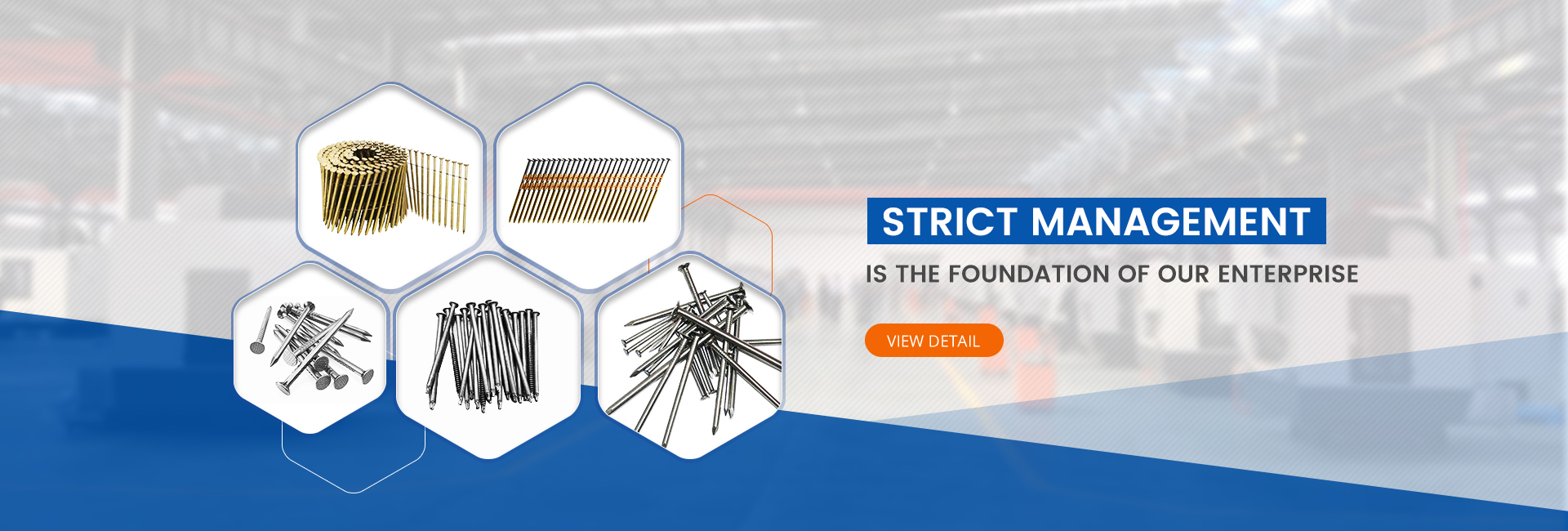
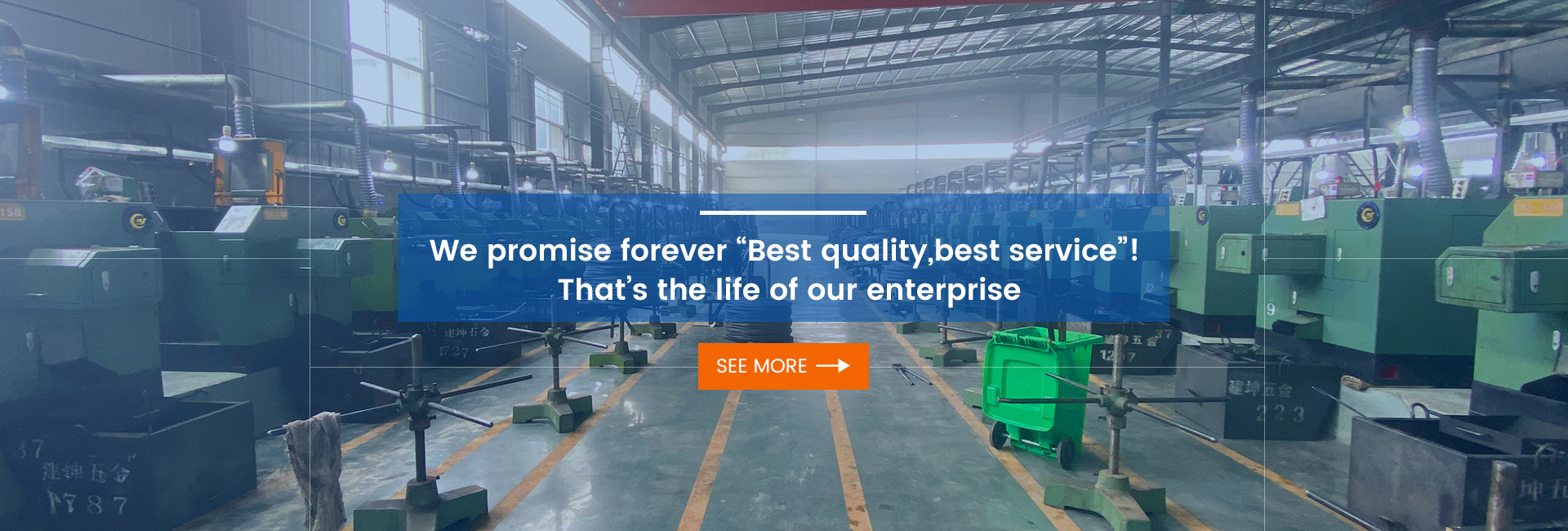
Coil nails may not be the most visible product in the fastener industry, but they play an important role in pallet manufacturing, wooden packaging, construction, fencing and other wood-related applications.
As we move through 2026, the global coil nail industry is not simply moving toward lower prices. For many professional buyers, the focus is gradually shifting from price alone to consistency, productivity, automation compatibility, quality control and supply chain reliability.
1. Pallet Manufacturing Remains a Key Application
Wooden pallets remain one of the most important applications for coil nails.
As global logistics, warehousing and international trade continue to develop, pallet manufacturers are under increasing pressure to improve production efficiency while maintaining reliable fastening performance.
This is where coil nails have a clear advantage. They can work efficiently with automatic feeding systems and pneumatic coil nailers, making them suitable for high-volume pallet production.
For a factory producing thousands of pallets every day, the real question is not simply whether a nail can be driven into wood. It is whether the nails can be fed and driven continuously, accurately and reliably throughout the production process.
That makes dimensions, welding strength, feeding performance, point consistency and compatibility with nailers increasingly important.
2. Consistent Quality Is Becoming More Important Than the Lowest Price
Price will always matter in international trade.
However, for a pallet manufacturer, a small price difference can become insignificant if a batch of nails causes frequent jamming, feeding problems or machine downtime.
This is why professional buyers are paying closer attention to:
- Wire diameter consistency
- Nail length tolerance
- Welding strength
- Feeding performance
- Head and point consistency
- Surface treatment
- Packaging and loading efficiency
In other words, the purchasing question is gradually changing from:
“How much does one box cost?”
to:
“Can every nail perform consistently in our production line?”
3. Automation Is Changing Purchasing Standards
Automation is becoming increasingly important across global manufacturing, and pallet production is no exception.
For an automated production line, coil nails are not simply fasteners. They are one part of the entire production system.
If nail dimensions are inconsistent or welding quality is unstable, the result can be feeding problems, misfires, machine stoppages and unnecessary labor costs.
Therefore, future competition among coil nail suppliers will increasingly depend not only on the nail itself, but also on how well the product works with the customer’s equipment and production process.
This is why experienced buyers increasingly value suppliers who understand actual nailer performance and production requirements rather than simply offering a price list.
4. Sustainability Is Becoming More Important in the European Market
One of the major developments in 2026 is the implementation of the EU Packaging and Packaging Waste Regulation, or PPWR.
The regulation began applying on 12 August 2026, introducing a more harmonized framework for packaging sustainability, recyclability, reuse and environmental performance.
PPWR is not specifically a regulation for coil nails. However, it can influence the wider pallet and wooden packaging supply chain.
For fastener suppliers, this means customers may increasingly pay attention not only to the product itself, but also to packaging materials, packaging efficiency, transportation, material usage and overall supply-chain sustainability.
Interestingly, the European Commission also introduced an exemption in 2026 concerning certain 100% reuse requirements for pallet wrappings and straps, reflecting the practical challenges and investment costs involved in changing established packaging systems.
5. European Construction Recovery Is Another Trend to Watch
Coil nails are also widely used in construction, roofing, fencing, wooden structures and industrial wood packaging.
European construction activity has shown signs of a gradual recovery in 2026, supported by infrastructure, housing and public investment, although the pace remains uneven across different countries.
For the fastener industry, this creates opportunities in wood construction and other applications where efficient pneumatic fastening is required.
As prefabricated wooden components and industrialized construction continue to develop, the combination of high-performance pneumatic nailers and consistent coil nails will remain important.
6. The Future Competition May Be About Total Supply Capability
From an international buyer’s perspective, a good coil nail supplier is no longer simply a company that manufactures nails.
Customers increasingly expect suppliers to help solve practical problems, including:
- Recommending suitable specifications;
- Selecting the right nail length for different wood thicknesses;
- Matching nails with different nailer models;
- Maintaining consistent quality between batches;
- Providing reliable lead times;
- Optimizing packaging and container loading;
- Supporting market-specific technical and compliance requirements.
This means competition in the coil nail industry is gradually moving from product competition to a combination of product, technical knowledge, service and supply-chain capability.
Conclusion
A coil nail may be a small component, but it connects much bigger industries — pallets, construction, logistics and global supply chains.
For manufacturers, the real goal should not simply be producing more tons of nails. It is about consistently delivering products that are reliable, automation-friendly, dimensionally consistent and suitable for different international markets.
As global manufacturing continues to prioritize efficiency, quality and sustainability, the coil nail industry is also moving toward a more professional and refined stage of competition.
A small nail can make a big difference when production runs thousands of times a day.
Post time: Aug-28-2026