

With the development of pallet manufacturing, wooden construction, furniture packaging, and automated building industries, coil nails have become one of the most widely used fasteners in modern industry.
Compared with bulk nails, coil nails provide higher efficiency, continuous feeding, and reduced labor costs. Therefore, they are widely used with pneumatic coil nailers.
However, many users still experience issues such as nail gun jamming, loose coils, broken welds, or unstable performance during actual use.
In fact, coil nail performance depends not only on quality, but also on proper usage.
Based on our years of production and export experience, we would like to share some important knowledge about coil nail usage.
1. What Are Coil Nails?
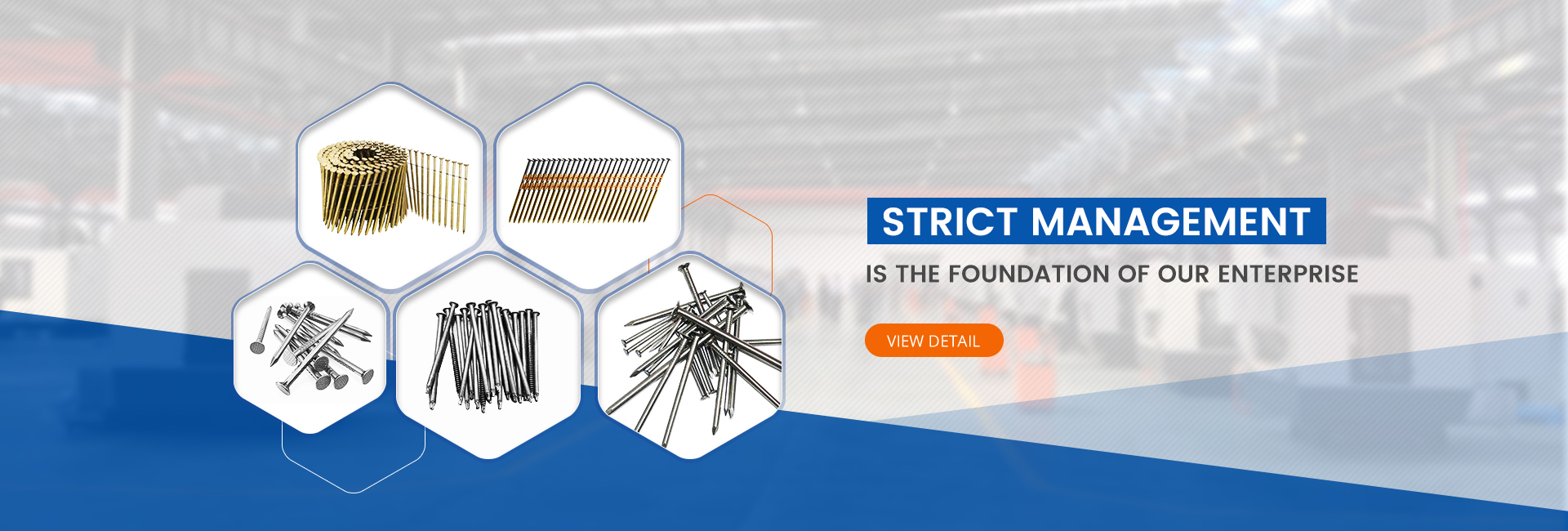
Coil nails are nails connected by welding wire or plastic sheets and rolled into a coil shape.
Common collations include:
- Wire Collated Coil Nails
- Plastic Sheet Coil Nails
Compared with loose nails, coil nails allow continuous automatic feeding, greatly improving working efficiency.
They are widely used in:
- Pallet manufacturing
- Wooden packaging
- Construction projects
- Roofing
- Wooden houses
- Fence production
- Furniture manufacturing
2. How to Choose the Right Coil Nails
Many customers think “correct size is enough,” but selecting coil nails actually requires considering multiple factors.
1. Choose Material Based on Environment
Carbon Steel Coil Nails
Suitable for normal indoor applications with lower cost.
Electro Galvanized Coil Nails
Better appearance for dry environments.
Hot Dipped Galvanized Coil Nails
Better corrosion resistance for outdoor or humid environments.
Stainless Steel Coil Nails
Best corrosion resistance for coastal areas and long-term outdoor use.
Proper material selection can significantly extend service life.
2. Choose Shank Type According to Wood
Different wood materials require different nail shanks.
Smooth Shank
Easy to drive into normal wood.
Ring Shank
Stronger holding power, widely used for pallets and export packaging.
Screw Shank
Better fixing strength for hardwood and heavy-duty structures.
Incorrect shank selection may cause wood cracking or weak fixing performance.
3. Pay Attention to Coil Angle
Different nail guns require different coil angles.
Common angles include:
- 15 Degree
- 16 Degree
If the angle does not match, problems may occur:
- Nail gun jamming
- Feeding issues
- Nail deformation
Therefore, customers should confirm the nail gun model before purchasing coil nails.
3. Common Problems During Use
1. Nail Gun Jamming
Many jamming issues are not caused by nail quality, but by:
- Unstable air pressure
- Poor lubrication
- Dust inside the nail gun
- Incorrect nail angle
Regular maintenance of the coil nailer is recommended.
2. Rust Problems
Rust is commonly caused by:
- Humid storage conditions
- Damaged packaging
- Improper galvanizing
- Long-term rain exposure
Therefore, coil nails should be stored in dry and ventilated areas.
3. Loose Nail Coils
Strong impact during transportation may cause:
- Broken welding wires
- Damaged plastic collations
- Loose coils
Proper handling during loading and unloading is very important.
4. Importance of Proper Coil Nailer Maintenance
The condition of the coil nailer directly affects working performance.
Recommendations:
- Add lubricating oil regularly
- Maintain stable air pressure
- Clean wood dust and debris
- Use matching nail specifications
- Avoid long-term overload operation
Many users overlook nail gun maintenance, but it is one of the key factors affecting jobsite efficiency.
5. Why More Customers Choose High-Quality Coil Nails
As automation increases, customers demand higher stability from coil nails.
Low-quality coil nails may lead to:
- Downtime
- Nail gun jamming
- Lower worker efficiency
- Customer complaints
- Product rework
Stable high-quality coil nails help customers:
- Improve efficiency
- Reduce labor costs
- Reduce material waste
- Improve final product quality
Therefore, more professional buyers focus on long-term stability rather than only the lowest price.
Conclusion
Although coil nails are small fasteners, they directly affect the entire production and construction process.
Proper selection, correct usage, and good maintenance can improve efficiency and reduce unnecessary problems.
As a professional coil nail manufacturer, we always believe:
A truly good coil nail is not only easy to drive, but also remains stable during high-speed operation.
Post time: May-29-2026