

In today's fast-paced construction and manufacturing industries, productivity and consistency are more important than ever. To meet these demands, pneumatic fastening systems have become the standard choice for professionals worldwide. Among the essential fastening products used with these tools are collated nails and collated screws, which significantly improve installation speed while ensuring reliable fastening performance.
What Are Collated Nails and Collated Screws?
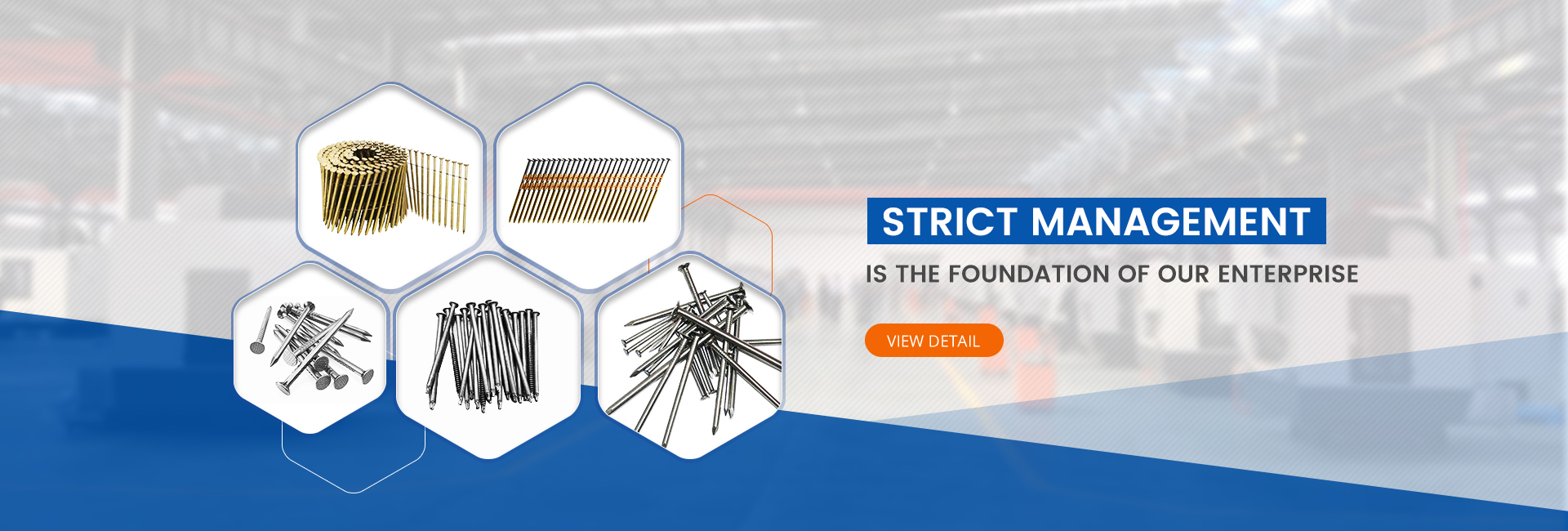
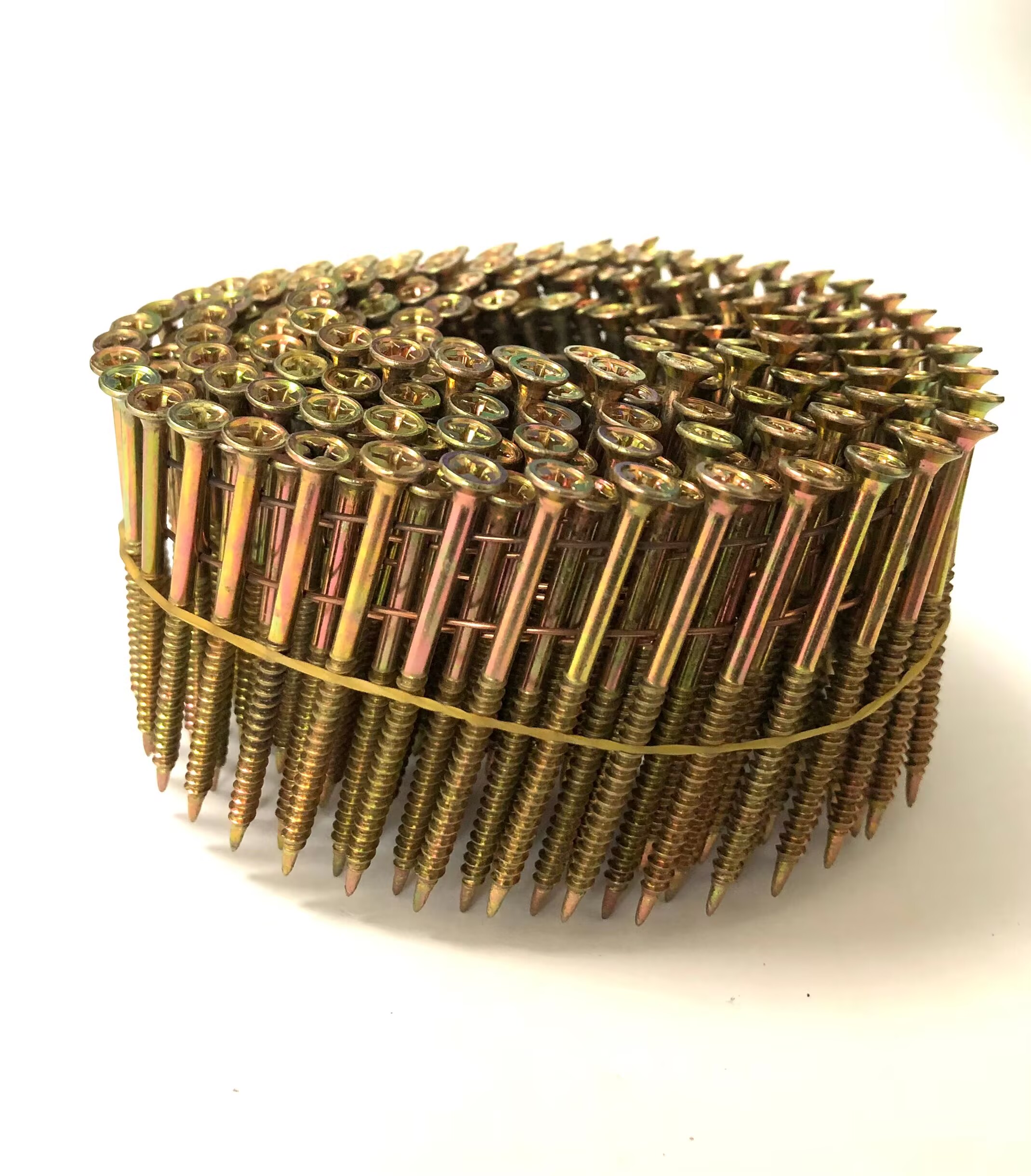
Collated nails and collated screws are fasteners that are joined together in strips or coils using plastic, paper, or wire. This design allows them to be automatically fed into pneumatic or cordless nailers and screw guns, eliminating the need to load individual fasteners manually.
Compared with loose fasteners, collated products greatly reduce downtime and improve work efficiency, especially in high-volume applications.
Main Types of Collated Fasteners
Different applications require different collated fastening systems, including:
- Wire collated nails
- Plastic strip nails
- Paper strip nails
- Coil nails
- Plastic sheet coil nails
- Roofing nails
- Framing nails
- Drywall collated screws
- Chipboard screws
- Self-drilling collated screws
Each type is designed for specific tools and applications to ensure maximum holding power and installation efficiency.
Advantages of Collated Nails and Screws
1. Higher Productivity
Automatic feeding allows operators to work continuously without frequent reloading, significantly increasing productivity.
2. Consistent Fastening Quality
Collated fasteners are manufactured with precise spacing and alignment, helping nailers and screw guns deliver accurate and consistent fastening.
3. Reduced Labor Costs
Faster installation means fewer labor hours are required, making collated fasteners an economical choice for large-scale projects.
4. Improved Workplace Safety
Since operators spend less time handling loose nails or screws, the risk of dropping fasteners or suffering hand injuries is reduced.
5. Better Compatibility
Modern collated nails and screws are compatible with many well-known pneumatic tool brands, allowing contractors to choose products that match their existing equipment.
Common Applications
Collated nails and screws are widely used in:
- Pallet manufacturing
- Wooden packaging production
- House framing
- Roofing installation
- Flooring systems
- Fence construction
- Furniture manufacturing
- Timber engineering
- Interior decoration
- Prefabricated buildings
As automation continues to develop, demand for collated fastening products continues to grow across global markets.
Choosing High-Quality Collated Fasteners
When selecting collated nails or screws, buyers should consider:
- Wire diameter and shank type
- Nail or screw length
- Surface treatment (Bright, Electro Galvanized, Hot-Dip Galvanized, Mechanical Galvanized, Stainless Steel)
- Coating (Ring shank, Screw shank, Resin coated)
- Collation material (Plastic, Paper, Wire)
- Tool compatibility
- Packaging quality
- Corrosion resistance
Reliable manufacturers also perform strict quality inspections covering dimensions, collation strength, welding quality, coating thickness, and feeding performance.
The Importance of Stable Manufacturing
Consistent production quality is essential for collated fasteners because even minor deviations can lead to tool jams or fastening failures.
Professional manufacturers utilize automated production lines together with advanced inspection equipment to ensure every strip or coil maintains stable dimensions, strong collation, and smooth feeding performance.
With growing demand for faster construction and automated manufacturing, high-quality collated nails and collated screws will continue to play a vital role in improving efficiency, reducing labor costs, and delivering reliable fastening performance worldwide.
Post time: Jun-29-2026