

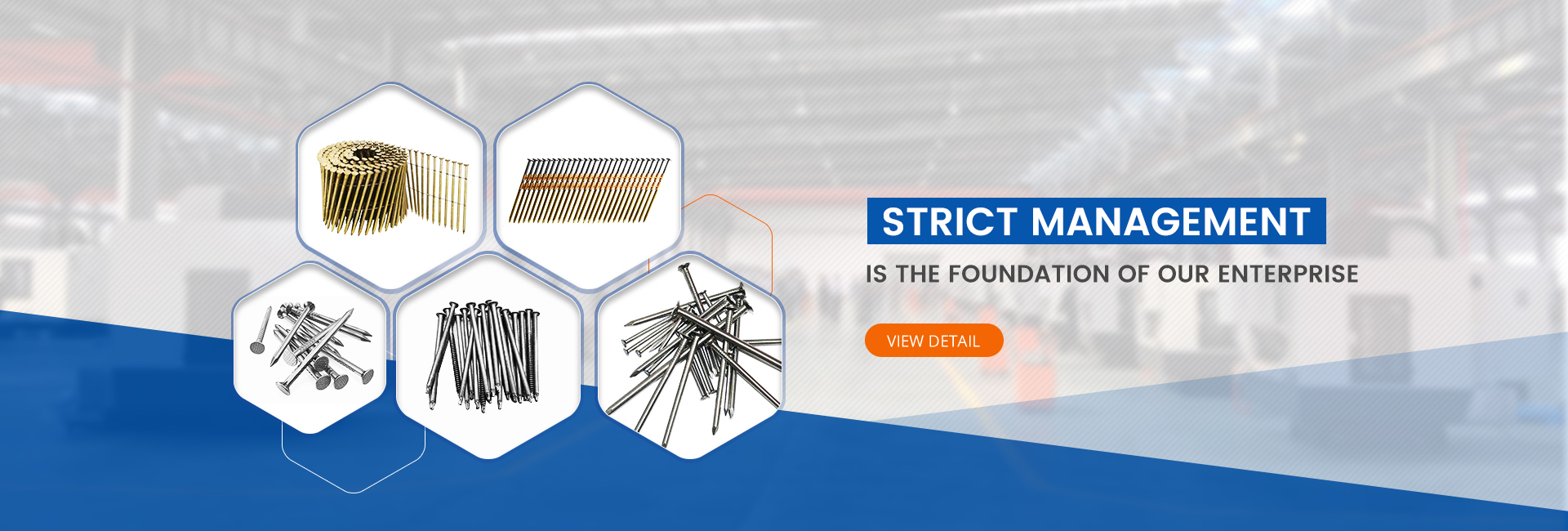
In today’s fast-paced construction and industrial manufacturing environment, fastening efficiency and consistency are critical. Among various collated fastening solutions, paper strip nails have become a preferred choice for professionals due to their clean operation, reliable performance, and adaptability across applications such as framing, pallet production, and general woodworking.
Paper strip nails are typically arranged at fixed angles—commonly 30° to 34°—and bonded together with paper tape. This design allows them to be seamlessly used in pneumatic nailers, ensuring smooth feeding and accurate placement. Compared to plastic strip or wire collated nails, paper strip nails generate significantly less debris during operation. The paper tape disintegrates upon firing, leaving minimal residue, which is particularly beneficial for indoor construction sites or environments with strict cleanliness requirements.
One of the key advantages of paper strip nails lies in their consistent collation and alignment. Uniform spacing between nails ensures stable feeding performance, reducing the risk of jamming and downtime. This is especially important in high-speed production environments, where even minor interruptions can impact overall productivity. For pallet manufacturers, where large volumes of nails are consumed daily, this reliability translates directly into operational efficiency and cost savings.
Another important factor is the versatility of nail shank designs. Paper strip nails are available in smooth, ring, and screw shank configurations, each serving a different purpose. Smooth shank nails are suitable for general applications where ease of driving is required. Ring shank nails provide enhanced holding power due to their annular threads, making them ideal for pallet assembly and structural applications. Screw shank nails offer even greater withdrawal resistance, especially in hardwood or high-load conditions. Selecting the appropriate shank type can significantly improve the durability and performance of the final product.
Surface treatment is also a crucial aspect of paper strip nail performance. Common finishes include electro-galvanized (EG), hot-dip galvanized (HDG), and other specialized coatings. These treatments enhance corrosion resistance, allowing the nails to perform reliably in various environmental conditions. For outdoor applications or areas exposed to moisture, HDG nails are often recommended due to their thicker zinc coating. Proper surface treatment not only extends the lifespan of the fasteners but also contributes to the structural integrity of the assembled components.
In addition to performance, environmental considerations are becoming increasingly important in the fastening industry. Paper strip nails offer a more eco-friendly alternative compared to plastic collated nails, as the paper material is biodegradable and reduces plastic waste on job sites. This aligns with global trends toward sustainable construction practices and responsible material usage.
From a manufacturing perspective, producing high-quality paper strip nails requires strict control over multiple factors, including wire quality, nail forming precision, surface treatment consistency, and paper tape bonding strength. Reliable adhesion between the nails and the paper strip is essential to ensure that the nails remain intact during transportation and feeding, yet separate cleanly during firing. Advanced production equipment and quality inspection processes play a vital role in achieving this balance.
In conclusion, paper strip nails represent a well-balanced fastening solution that combines efficiency, reliability, and environmental benefits. Whether used in construction framing, pallet manufacturing, or industrial assembly, they provide consistent performance and help optimize workflow. As the demand for high-quality and sustainable fastening solutions continues to grow, paper strip nails are expected to remain a key product in the global fastener market.

Post time: May-06-2026